Velocity Bikes
A Mobile E- Commerce Experience Designed to Increase Conversion Though Confidence, Clarity and Frictionless Checkout
Overview
Velocity bikes is a mobile first e-commerce experience designed for serious cyclists investing in high-quality bikes. While users were highly engaged in browsing, the platform struggled with low conversion due to decision uncertainty and checkout friction
Goal Increase conversion from browsing to checkout completion by improving decision confidence and reducing friction.
Role: Ux Researcher & Product Designer
Durations: 90 hours
Project Type: Solo-Project - Springboard UI/UX Career Track
Problem
Serious buyers are willing to invest in high-end bikes, but struggle to confidently choose the right one.
Users browse extensively, compare options across multiple tabs, and rely on external research before making a decision. This leads to hesitation, decision fatigue, and ultimately drop off.
At the same time, checkout introduces unnecessary friction.
50% of users browse product pages but never add to cart
70 % of users abandon after adding to cart due to required account creation.
This reveals a deeper issue:
The problem isn’t usability…it’s confidence.

Solution
Velocity Bikes focuses on guiding users to confident decisions while removing friction at critical moments.
Decision Confidence Through Guidance
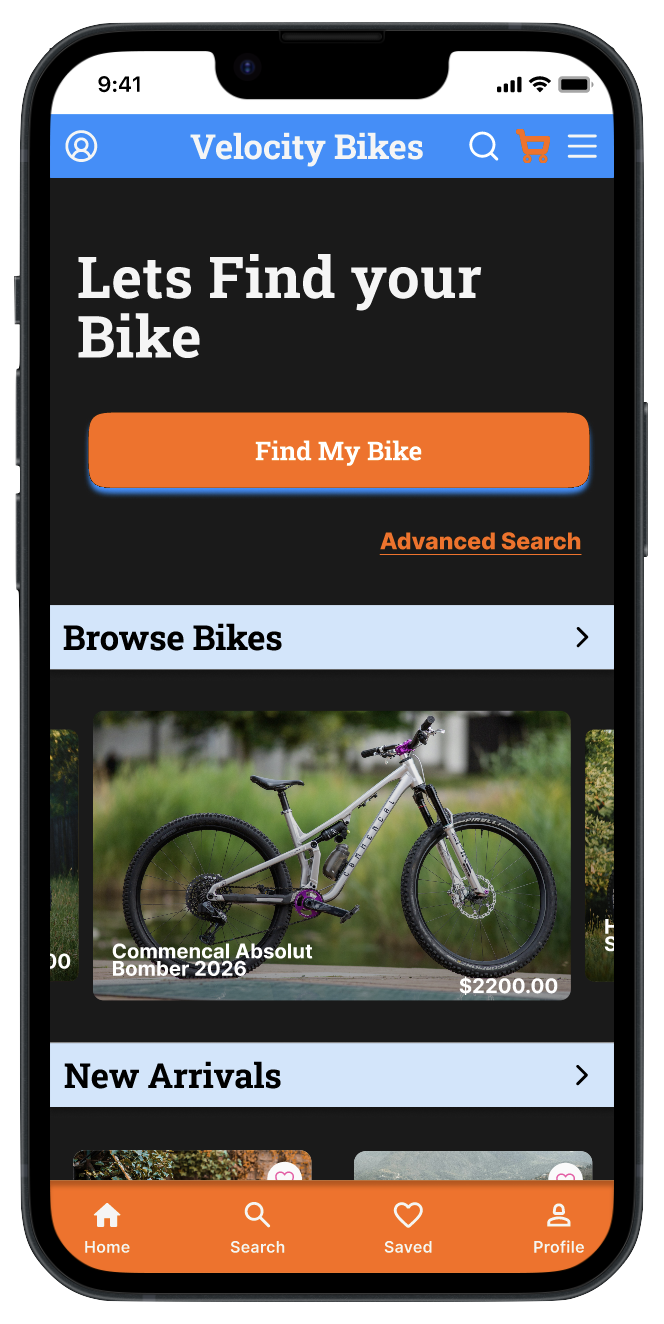
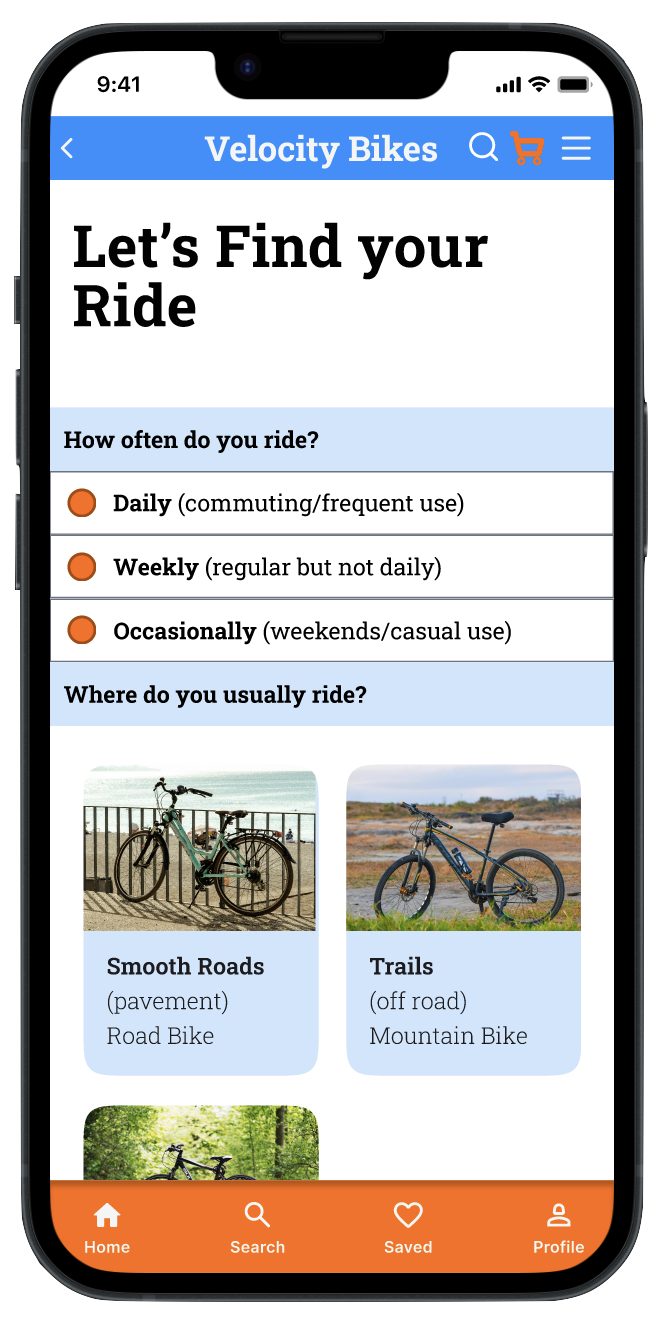
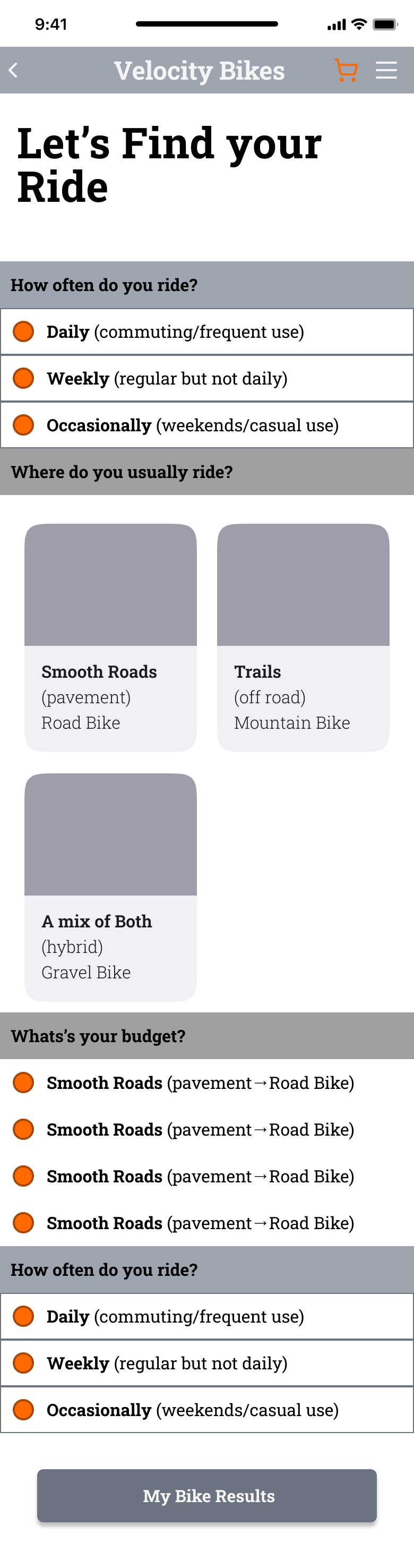
“Find My Bike” quiz to narrow choices quickly
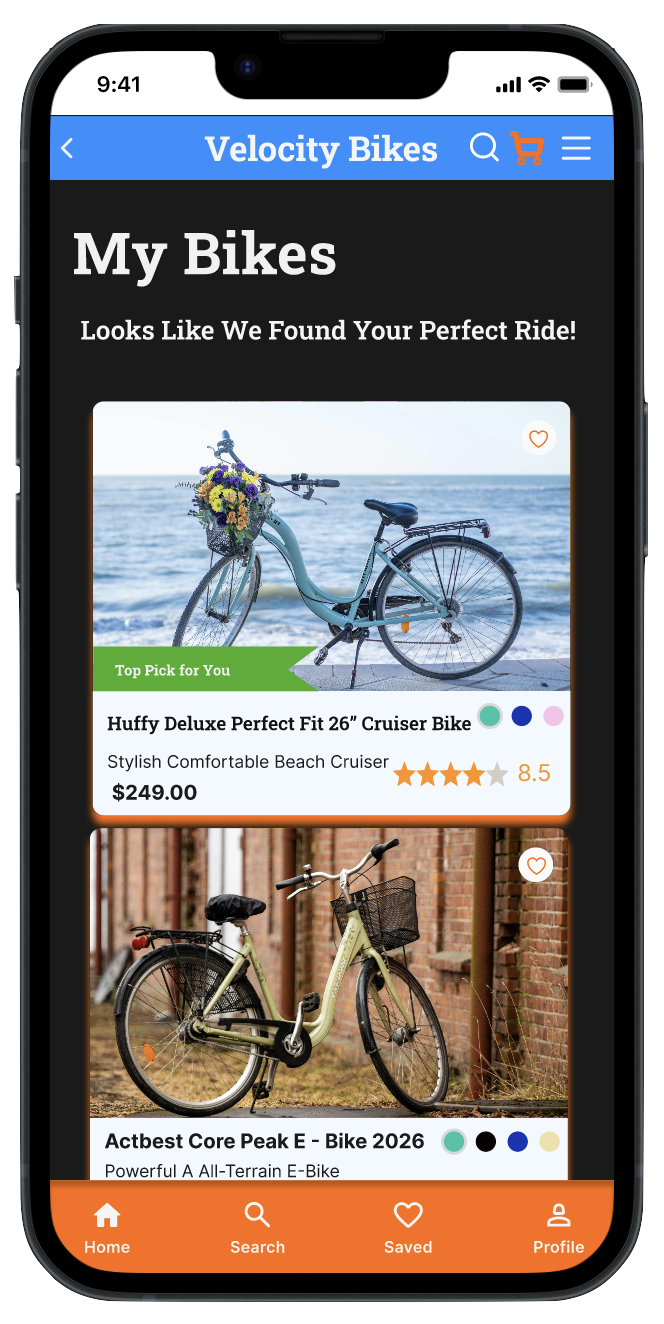
Personalized recommendations based on user needs
“Best For” summaries to simplify decision making
Clarity Over Complexity
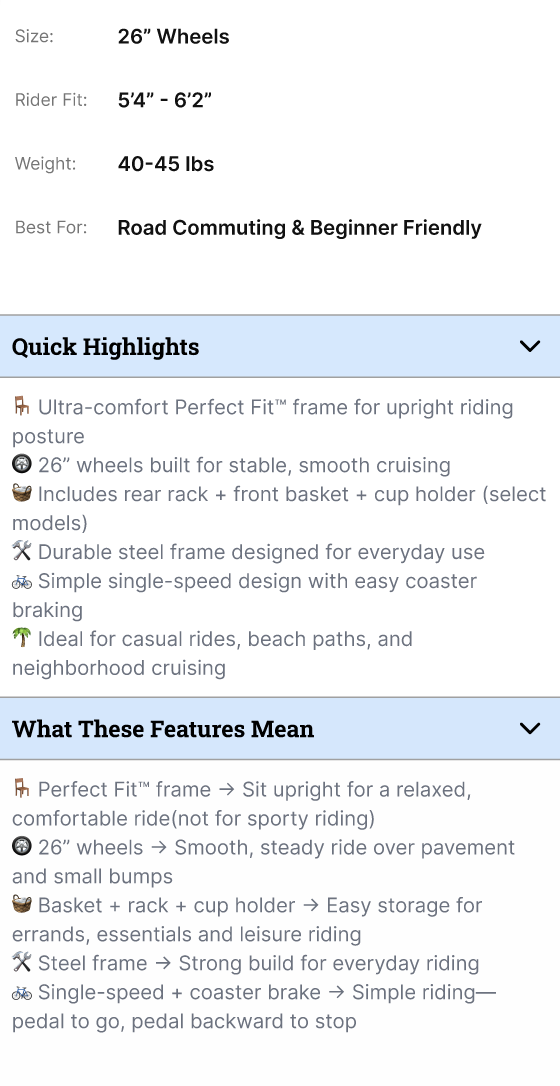
Translate technical specs into benefit-driven language
Highlight key differences instead of overwhelming users with data
Provide structured comparison tools
Frictionless Checkout
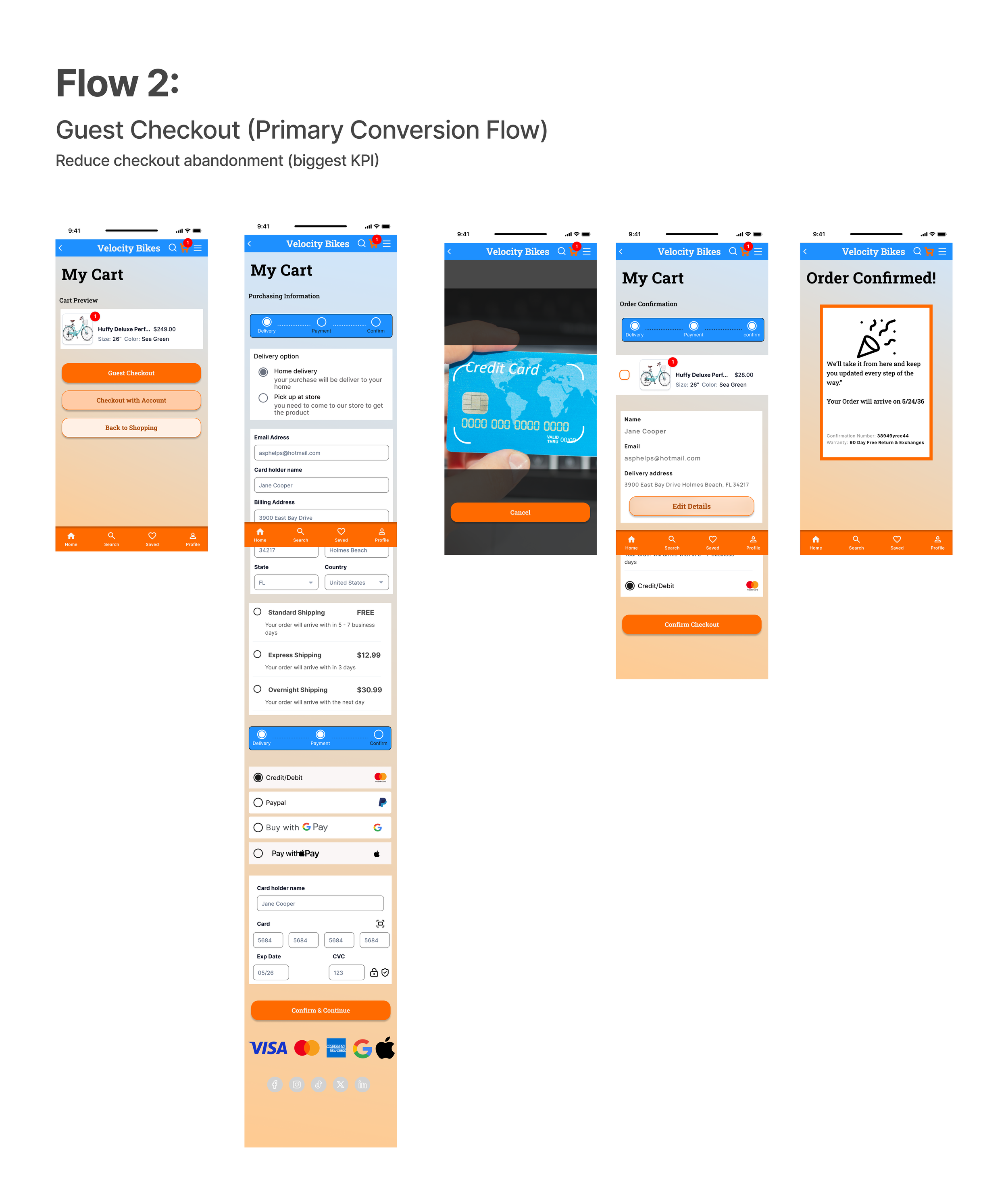
Guest checkout with email capture
Simplified mobile first flow
Clear progress indicators
Key Benefits
Increase decision confidence
Reduced cognitive load during browsing
Faster path from discovery to purchase
Lower checkout abandonment
Research
Let’s Dig Deeper into the Problem
Methods Used
User Interviews + Survey Data + Competitive Analysis + Usability Testing (2 Rounds)
To understand how users evaluate bikes and where they experience friction, I conducted interviews with cyclists and analyzed industry leaders.
Insights
Decision Fatigue Blocks Progress
1
Users browse multiple options but struggle to commit.
“ I open a bunch of tabs and get overwhelmed.”
Comparison is Difficult
2
Users want clarity not raw specifications.
“I don’t know what the differences really mean.”
Technical Specs Create Conversion
3
Complex terminology increases cognitive load.
“I wish it just told me what bike is best for me.”
Checkout Friction Kills Conversion
4
Mandatory account creation leads to abandonment.
“If I have to make an account, I leave.”
Trust Drives Final Decisions
5
Users rely heavily on reviews and reassurance.
“I want to know other people like it.”
Analysis
After synthesizing research, three core themes emerged
Theme 1: Users Need Help Making Decisions
Users don’t need more options, they need guidance.
Theme 2: Users Want Simpler, Clearer Information
Users don’t need more options, they need guidance.
Theme 3: Users Need Help Making Decisions
Barriers like account creation significantly reduce conversion.
Insights
Users are highly motivated but lack the confidence to commit. When decision making becomes overwhelming, they delay or abandon entirely.
This positions Velocity Bikes as an opportunity to guide, simplify and reassure users throughout their journey.
How Might We…
Help users confidently choose the right bike by simplifying comparisons, improving product clarity, and removing friction from checkout?
Design
Initial Direction + Strategy
Based on research and competitive analysis, I focused on:
Guided decision making instead of open browsing
Simplified product understanding
Reducing friction at key conversion points
Competitive Analysis

Amazon
Strong comparison tools + trust signals
Applied: Comparison + reviews
Major Improvements in My Design
Guided Bike Selection (Find My Bike Quiz)
User needed a starting point
Solution:
A guided quiz that recommends bikes based on:
Riding Frequency
Terrain
Budget
Experience level
Impact:
Reduces overwhelm Builds early confidence
“This is much better, it narrows things down.”
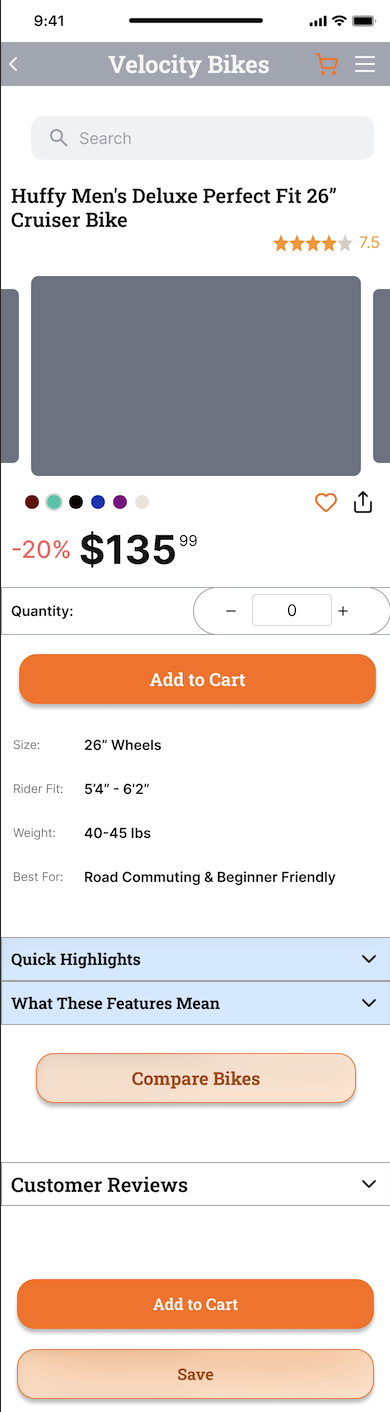
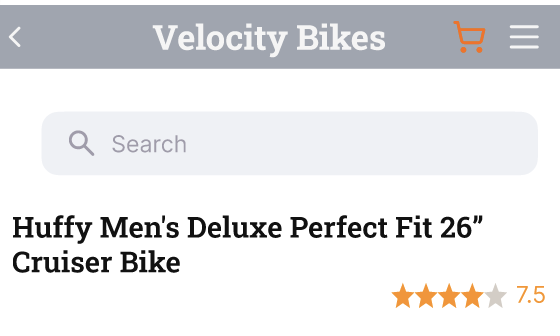
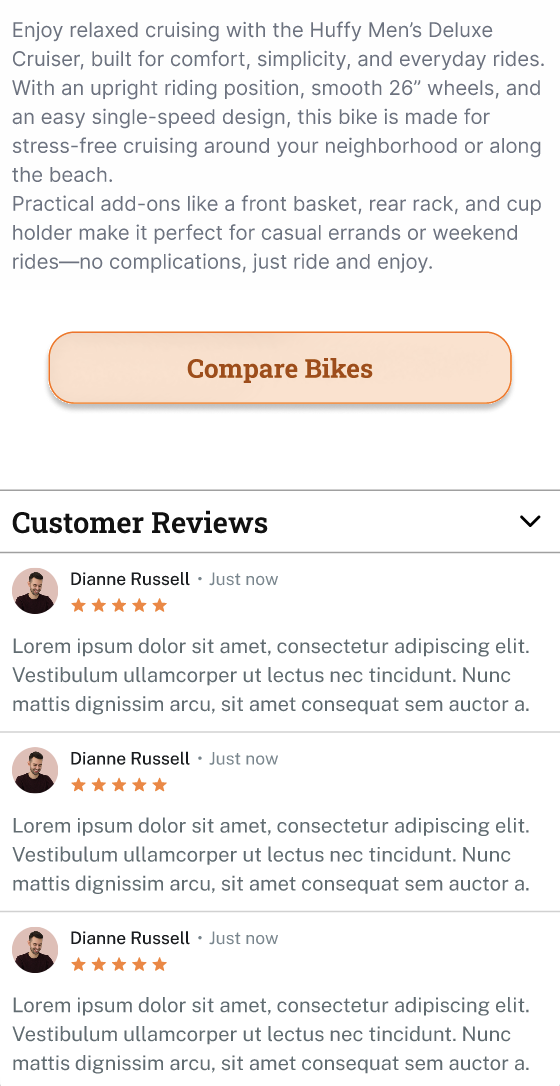
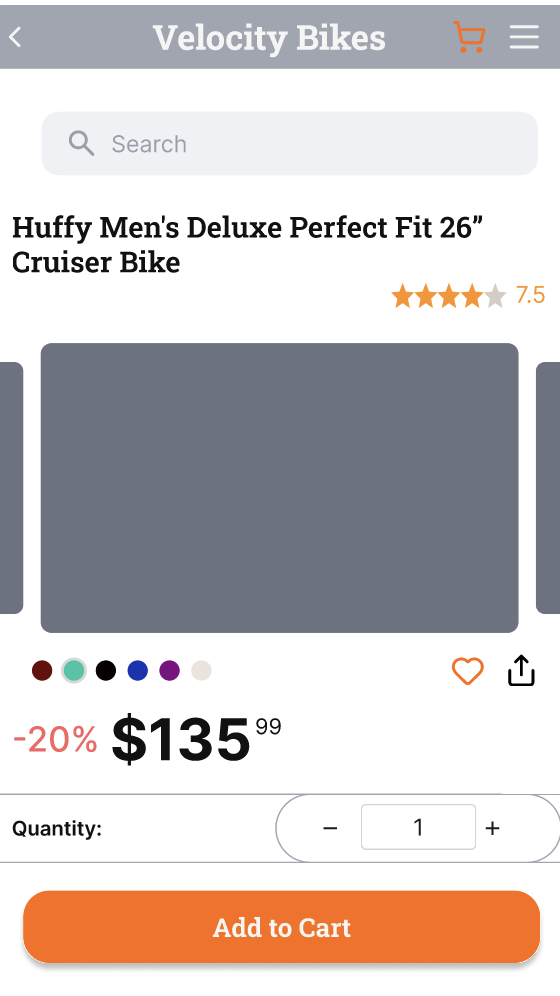
Simplified Product Pages
Users struggle to understand specs.
Solution:
“Best For” summaries
Quick highlights
“What This Means” explanations
Impact:
Faster understanding
Reduced cognitive load
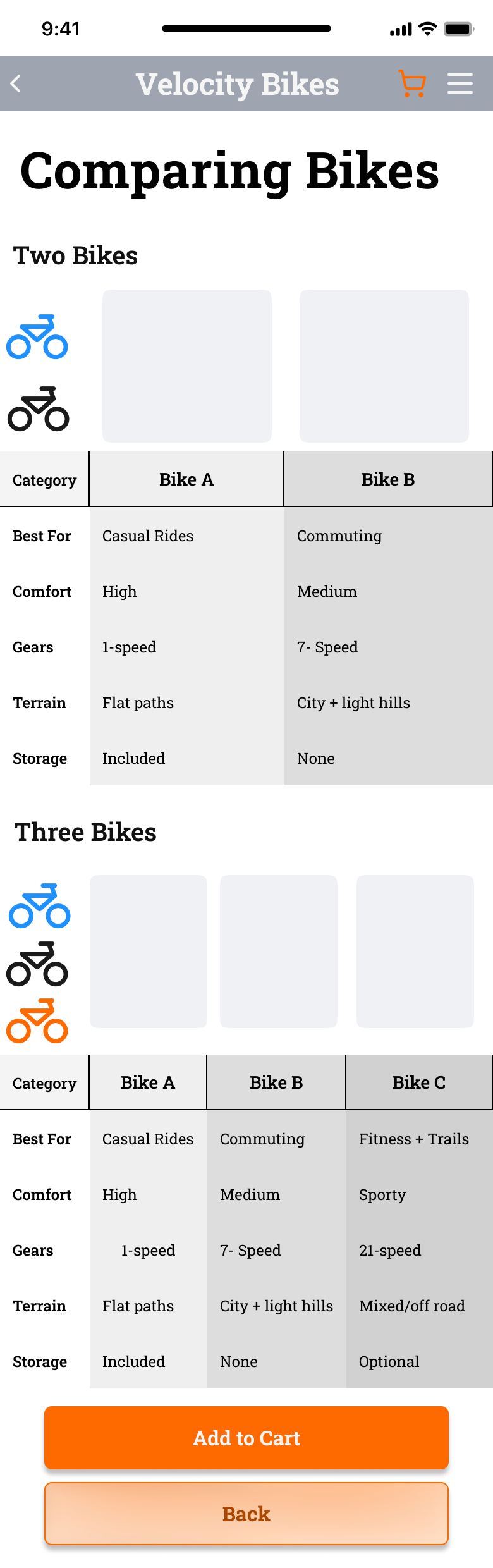
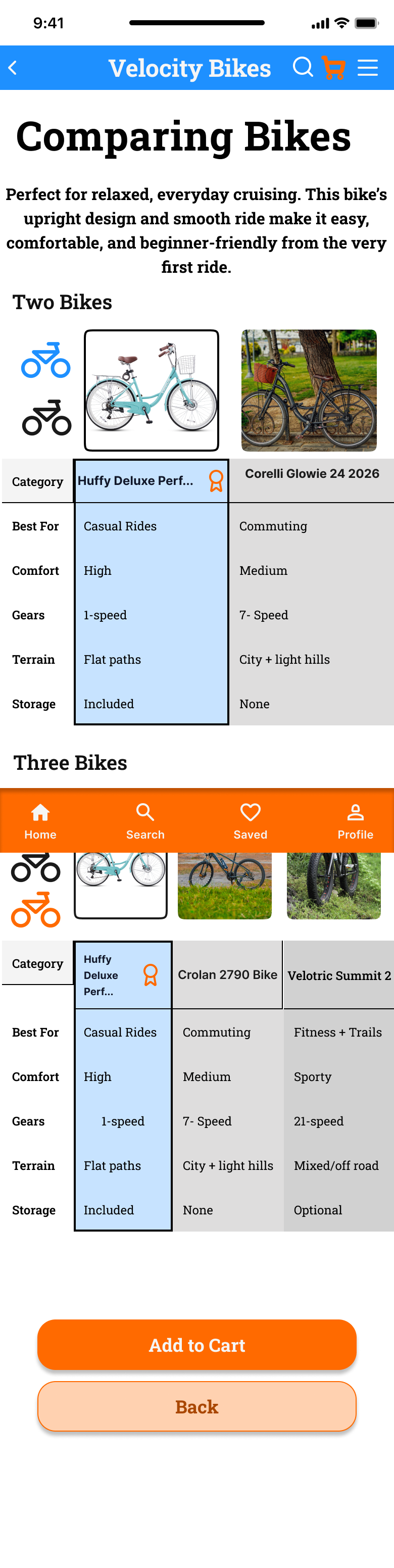
Side by Side Comparison Tool
Users needed structured evaluation.
Solution:
Compare 2–3 bikes
Highlight key differences
Add labels like “Top Pick” and “Best Value”
Impact:
Easier decision-making
Reduced analysis paralysis

Target
Seamless guest checkout
Applied: Frictionless Checkout
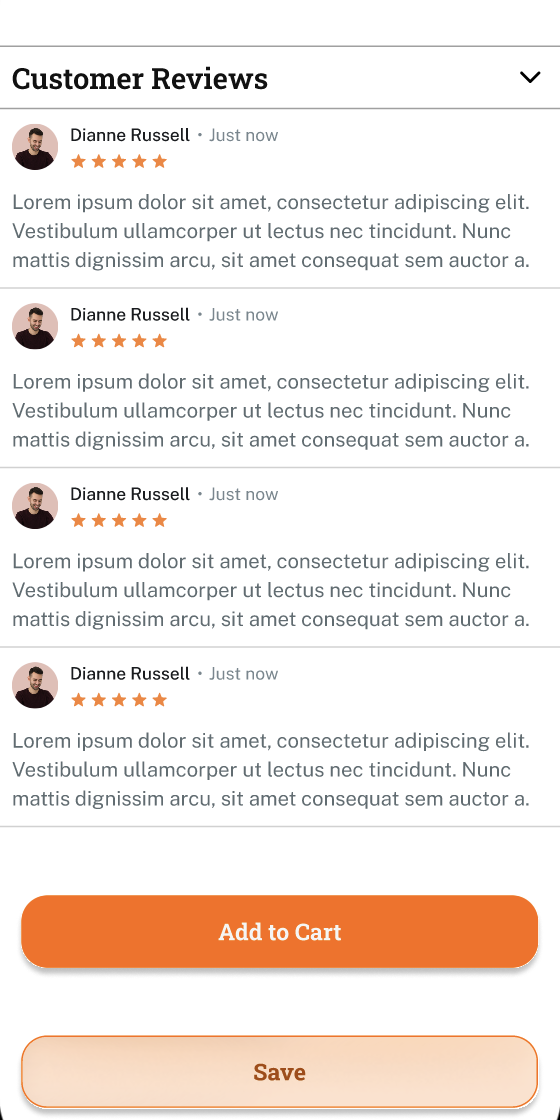
Confidence-Driven Add to Cart
Users hesitated before committing.
Solution:
Reviews & ratings
Trust badges
Fit & sizing guidance
Impact:
Increased confidence
Higher likelihood to convert

Trek Bikes
Guided quizzes + Education
Applied: Bike Finder + simplified learning
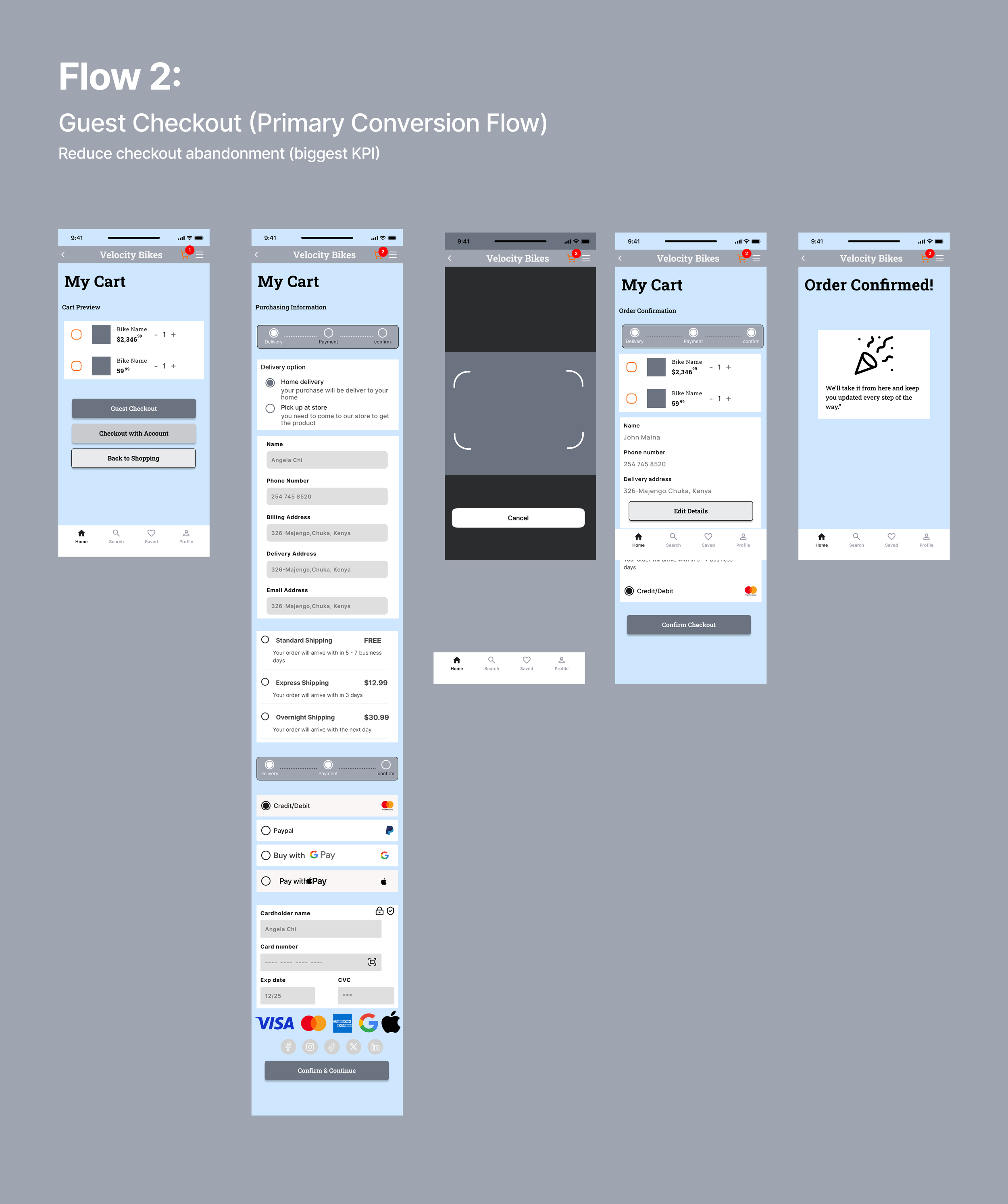
Guest Checkout (Critical Fix)
Checkout friction caused a major drop-off.
Solution:
Remove account requirement
Introduce guest checkout
Streamline steps
Flow:
Cart → Shipping → Payment → Review
Impact:
Reduced friction
Faster checkout completion
Trust & Reassurance Layer
Solution:
Reviews near product title
Return policies & warranties
Secure checkout indicators
User Testing
What Worked
Quiz significantly improved confidence
Comparison tools reduced overwhelm
Checkout became easier and faster


What Needed Improvement
Specs still confusing
Trust signals not prominent enough
Users unsure about sizing
No clear “best option”
Final Iterations
Highlighted trust signals
Translated specs into benefits
Introduced “Top Pick” labels
Added sizing guidance
Final Outcomes
Before
High browsing, low action
Decision fatigue
Checkout abandonment
After
↑ Decision confidence
↑ Add-to-cart rate
↓ Checkout abandonment
↑ Overall conversion
Final Screens
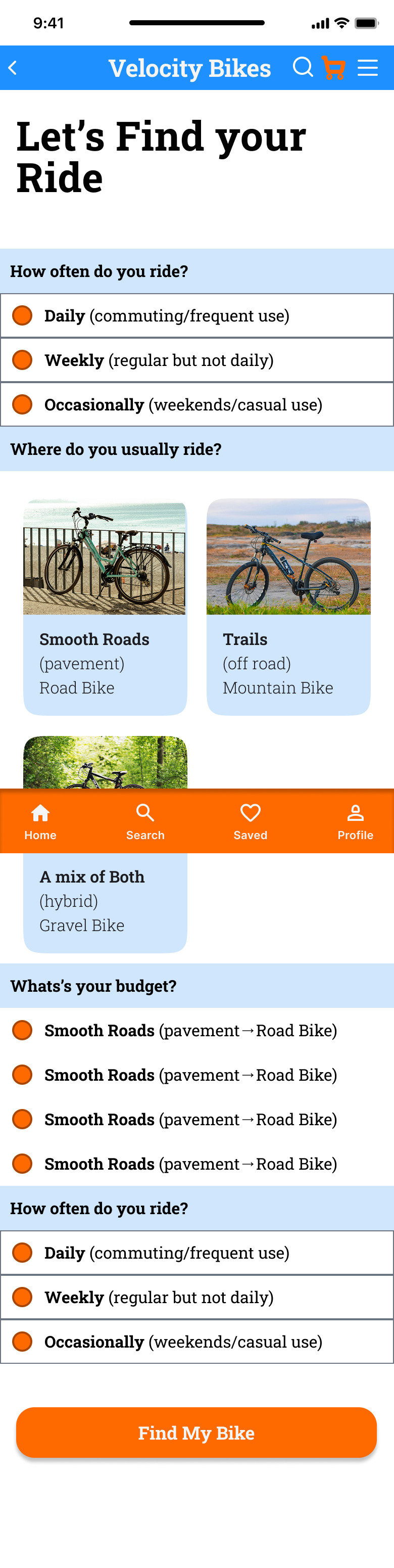

Find My Bike Quiz
Product Page
Comparison Tool
Checkout Flow
What I’d Do Differently Next Time
Simplify earlier
1
I initially focused on features instead of clarity. Simplifying early would have reduced iteration time.
Prioritize confidence metrics
2
Tracking user confidence explicitly would strengthen validation.
Design for both beginners and experts sooner
3
Balancing simplified content with advanced specs earlier would improve usability for all users.
Final Takeaway